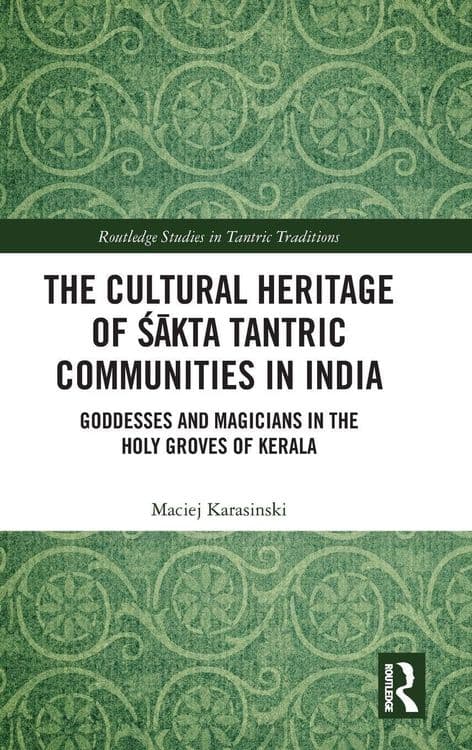
Despite the long tradition of exploring the Tantric temple culture of Nampūtiri Brahmins within Tantric studies, the Śākta stream remains under-researched. The Cultural Heritage of Śākta Tantric Communities in India: Goddesses and Magicians in the Holy Groves of Kerala (Routledge, 2026) therefore enriches understanding of these largely neglected sampradāyas (spiritual traditions), bringing them to the attention of the wider academic community and ultimately shedding light on Śākta communities often marginalised in the discourses on mainstream Asian religions.Forming one of the richest surviving religious-philosophical traditions …
Publisher: Routledge